Bedding guide
Fitted or Flat? Choosing the Right Sheet for Your Sleep Setup
The fitted sheet is a piece of practical engineering: elastic corners, a carefully measured pocket and a nightly contest with the mattress. The flat sheet is more leisurely. It lies between sleeper and duvet, ready to be folded back, pulled up or abandoned at dawn. Both have their uses; neither is a universal requirement.
Published 6 November 2026
A bed is often described as a collection of soft things, though some of those things are decidedly exacting. A fitted sheet must fit. A flat sheet need only be large enough to tuck, drape or fold in a way that pleases its owner. The distinction sounds obvious until a mattress gains a topper, a deep quilting pattern or a habit of sending its corners into the night.
Choosing between the two is not a referendum on tidiness, tradition or the moral character of anyone who makes a bed before breakfast. It is a question of how you sleep, what layers you want between you and the duvet, how your mattress is built, and how much care you are willing to give the fabric. Silk makes those questions more interesting, because a beautiful sheet is still a sheet: it must fit the bed and survive the laundry routine.
What each sheet does
A fitted sheet covers the mattress directly. Elastic, usually stitched around the corners or the full perimeter, holds it in place. Its job is to create a reasonably smooth sleeping surface that does not need to be retucked every time someone turns over. In a layered bed, it sits above a mattress protector and below any top sheet, blanket or duvet.
A flat sheet is a rectangle. It can be laid over the fitted sheet and tucked at the foot, left loose, or folded back over the duvet as a decorative layer. Some people sleep beneath it, appreciating a light barrier between themselves and the duvet cover. Others find that it twists around their legs or becomes an unnecessary morning chore. It is removable without stripping the mattress, which can make it a useful extra layer in warm weather or a convenient way to keep the duvet cover from needing frequent washing.
Neither arrangement is inherently more hygienic or more comfortable. The details matter: whether the sheet feels pleasant, whether it stays in place, how often the bedding is changed, and whether the duvet cover itself is doing the work you want it to do.
Start with the mattress, not the label
For fitted sheets, the most consequential measurement is pocket depth: the vertical distance from the mattress surface to the edge of the sheet’s fitted pocket. A mattress that looks standard on its own may become considerably taller when paired with a pillow-top, mattress pad or protector. Measure the whole stack you intend to cover, not just the mattress as it arrived.
Measure the mattress length and width, too. A sheet can have generous depth and still be the wrong size across the bed. For a more dependable fit, check the maker’s stated dimensions and compare them with your mattress. UK bed names such as single, double, king and super king are useful shorthand, but actual mattress dimensions can vary by product and supplier. Imported bedding may use different sizing conventions, so a label alone is not always enough.
Allow for the mattress’s depth without buying a pocket so oversized that the fabric gathers into folds. A little ease is useful; excess fabric can loosen or bunch. If the sheet is difficult to stretch over a corner, or repeatedly springs free, the pocket may be too shallow, the mattress size may be mismatched, or a thick topper may have altered the dimensions. A well-fitted sheet should feel secure without being pulled so taut that its seams strain.
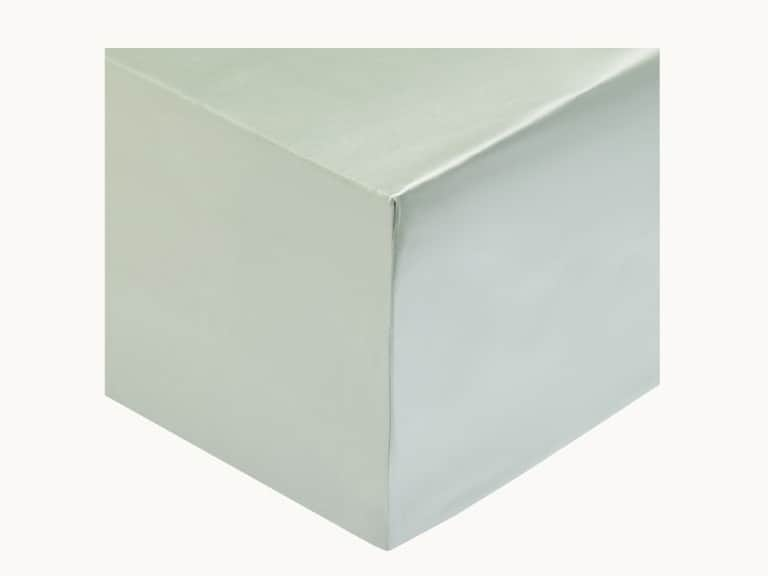
Silk fitted sheets deserve the same measuring discipline as cotton ones. For example, the Sage Silk Fitted Sheet is described as 100% long-strand mulberry silk, 19 momme, with a 15-inch pocket depth. That specification is a useful starting point, not a promise that it will suit every mattress. Compare the stated pocket depth with the complete height of your own bedding stack, and confirm the dimensions and care instructions before choosing.
The particular character of silk
Silk is a natural protein fibre with a smooth surface and a distinctive, fluid drape. In bedding, people often value its cool hand, lightness and gentle feel against the skin. How it performs in a bedroom depends on more than the word “silk”: fibre quality, weave, fabric weight, construction and the sleeper’s own preferences all contribute. A sheet cannot set the room temperature, and no material guarantees a particular night’s sleep.
Silk is also not a synonym for satin. Satin describes a weave that produces a smooth, lustrous surface; it can be made from different fibres. A satin-finish fabric may be silk, but it may also be made from another material. When comparing sheets, look for the fibre composition on the label rather than relying on the sheen or the name of the finish.
Some silk bedding is sold by momme, a traditional measure of the fabric’s weight. A higher number generally indicates more silk by area, but it is not a complete rating of quality or durability. Construction, finishing and care matter too. Thread count, which is often used to describe cotton, does not translate directly into a like-for-like comparison with silk. When in doubt, read the composition and weight information alongside the washing instructions.
Silk is often described as breathable and temperature-regulating. These terms can be useful shorthand for a fabric that feels light and handles moisture differently from some heavier textiles, but they should not be treated as medical claims or guarantees. Whether a particular sheet feels cool, warm, slippery or just right is personal—and may change with the room, season and layers on the bed.
When a fitted sheet is the sensible choice
A fitted sheet is a strong default if you want the mattress covered with minimal nightly rearrangement. It is especially helpful for restless sleepers, shared beds and mattresses that are deep enough to make a tucked flat sheet awkward. Once fitted correctly, it stays put through ordinary movement and gives the rest of the bedding a stable foundation.
It can also simplify making the bed. Stretch the sheet over the mattress corners, smooth it across the surface, and the essential layer is in place. The process is not always as effortless as the idealised domestic version—elastic can be stubborn, mattresses can be heavy, and fitted corners have been known to resist cooperation—but the result is usually less loose fabric to manage.
For silk, that snug surface can make the fabric’s smooth feel part of the everyday sleep setup rather than an occasional luxury layer. The trade-off is that a fitted sheet must match the mattress closely and can be more fiddly to fold and store. Its elastic may also need careful handling: pulling sharply on one corner or forcing a too-small sheet over a thick mattress can put unnecessary strain on seams and fibres.
When a flat sheet earns its place
A flat sheet offers choice. In a cool room, it can be a light layer beneath the duvet. In a warmer one, it may be all the covering a sleeper wants. It can also be folded down when the bed is made, adding a visible border above the duvet cover without requiring a different cover or blanket. Its loose shape makes it easy to remove for washing, and there are no elastic corners to wrestle into place.
That flexibility comes with a little nightly uncertainty. A loose sheet can shift, wrinkle or become tangled, particularly if its size is too small for the bed or the sleeper moves around. Tucking it firmly at the foot can help, though people who dislike being tucked in may find this counterproductive. The right choice may depend less on a design rule than on whether you wake up annoyed by the sheet.
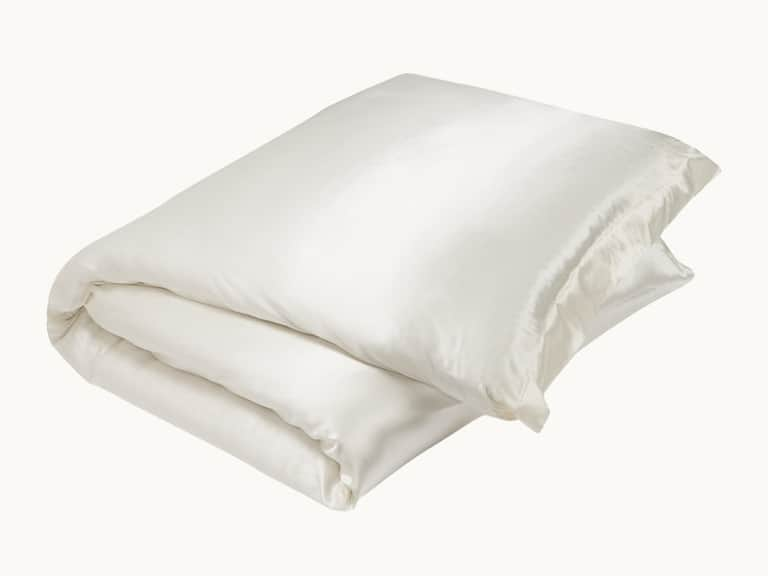
In a silk bedding arrangement, a flat sheet can add a smooth layer without replacing the fitted sheet that protects the mattress. It may be a good way to try silk against the skin before committing to a full set, or simply a way to adjust the layers from one night to the next. If you prefer the bed uncluttered, a silk pillowcase or duvet cover may give you the texture you want without another layer to wash and fold.
A question of layers and laundry
Think about what each layer is expected to do. A mattress protector helps shield the mattress; a fitted sheet gives you a washable surface directly above it; a flat sheet can sit between you and the duvet; the duvet cover encloses the comforter. These roles can overlap in practice, but they are not identical. A duvet cover is not a fitted sheet, and a flat sheet will not protect the mattress as reliably as a properly fitted layer and protector.
Laundry habits may settle the argument. A flat sheet can be removed and washed separately from the duvet cover, which some households find convenient. Others would rather wash fewer separate pieces and put that effort into changing the duvet cover regularly. A fitted sheet is a routine item in either arrangement. If your bedding includes silk, care instructions deserve particular attention because they may differ between a sheet, a duvet cover and a comforter.
For silk sheets, follow the label for water temperature, detergent, drying and ironing. Some products specify a delicate machine cycle at a low temperature, a mild silk-safe detergent and air drying; others may have different instructions. Do not assume that all silk can be washed in the same way, or that a general guide overrides the maker’s care label. Avoid bleach and harsh treatment unless the product instructions explicitly allow it. If a machine is used, a gentle cycle and a suitable laundry bag may offer extra protection, but the care label remains the authority.
Silk can be more susceptible to damage from rough handling than some hard-wearing cottons. Turn items inside out if instructed, fasten zips or buttons on neighbouring laundry, and keep them away from rough fabrics that could snag. Air drying is often recommended for silk bedding; direct, prolonged sun can affect delicate fibres and colour, so choose a suitable drying place. If an iron is permitted, use the cool setting stated on the label and avoid pressing the fabric more than necessary.
A simple way to decide
Rather than choosing a side in the long-running fitted-versus-flat dispute, begin with your actual bed. What does the mattress measure, including its topper and protector? Does your current sheet stay in place? Do you want a separate layer under the duvet? How often are you willing to wash and remake the bed? The answers usually point toward a practical setup.
- Choose fitted first if you want a secure base, have a deep mattress or dislike loose fabric shifting during the night.
- Add a flat sheet if you want a light, removable layer between you and the duvet or enjoy adjusting your coverage.
- Use both if you value a smooth mattress surface and the flexibility of a separate top layer.
- Skip the flat sheet if it tangles, adds unwanted warmth or simply makes laundry more complicated.
- Measure before buying any fitted sheet, paying special attention to mattress depth and the extra height of toppers and protectors.
- Check the care label for every silk item; do not assume a duvet cover and a fitted sheet share identical washing requirements.
If you are unsure about silk, there is no need to redesign the entire bed in one act of enthusiasm. A single silk sheet can change the feel of the surface while leaving the rest of the arrangement familiar. It is worth considering how it will interact with the mattress, whether its pocket depth is adequate, and whether its care routine suits your household before deciding. The finest bedding is not necessarily the most elaborate. It is the arrangement you can sleep in comfortably and look after without resenting it.
Questions readers often ask
Can I use a flat sheet without a fitted sheet?
You can, but a flat sheet is not designed to grip the mattress. It may shift more readily, and it offers less dependable coverage of the mattress itself. A fitted sheet is generally the more practical base layer, with a flat sheet added if you want it.
Is a fitted sheet with a 15-inch pocket deep enough?
Only if the total height of your mattress, topper and protector is compatible with the sheet’s dimensions. Measure the complete stack and compare it with the maker’s pocket-depth guidance. The number on its own cannot account for every mattress design or the amount of fabric needed to tuck securely underneath.
Does silk need a flat sheet above it?
No. A flat sheet is a matter of preference and layering, not a requirement for silk. Some sleepers like the extra layer; others prefer the feel of a fitted silk sheet with a duvet above it. Follow care instructions for the individual items whichever arrangement you choose.
Should silk sheets be washed with ordinary laundry?
Check the product’s care label first. If machine washing is permitted, use the stated cycle, temperature and detergent, and avoid mixing delicate silk with rough or abrasive items. If the label calls for a different form of cleaning, follow that guidance rather than a general rule.
The bed as a small personal system
The fitted sheet is the bed’s quiet foundation; the flat sheet is its adjustable layer. One makes a claim on the mattress, the other leaves more room for negotiation. Silk brings a particular texture to either role, but it does not make the basic decisions disappear: measure accurately, consider how you sleep, and treat care instructions as part of the purchase rather than a footnote.
In the end, a well-made bed is not the one with the most layers or the most exacting arrangement. It is the one that behaves as you need it to, from the first cool moment beneath the covers to the less glamorous business of washing and remaking it. If a fitted sheet stays smooth and a flat sheet stays welcome, use both. If one of them keeps losing the argument with your sleep, let it go.